The 5pm Dinner Panic: Why Working Moms Can't Plan (And How to Fix It)
It's 5:14 PM on a Tuesday. You just finished a meeting that ran over. You're driving home, the kids are about to be hungry, and you have no idea what you're cooking tonight. You can already feel the freezer-staring coming.
This isn't a willpower problem. It's a design problem.
The Real Reason Dinner Falls Apart at 5pm
Most working moms I talk to assume they're failing at dinner because they're disorganized, or because they should "just meal prep on Sunday." Both assumptions are wrong, and both keep you stuck in the same loop.
The actual reason weeknight dinners fall apart has a name: decision fatigue. Researchers have studied it since the early 2000s, and the findings are consistent. The average adult makes around 35,000 decisions per day. By 5pm, your prefrontal cortex (the part of your brain that handles complex choices) has been firing nonstop for ten hours. It's tired. It doesn't want to decide.
So when you stand in front of the fridge at 5:30, the question "what's for dinner" feels disproportionately heavy. Not because dinner is hard. Because you've already made 34,997 decisions today.
What's actually happening in your kitchen at 5pm
If you've ever caught yourself in this loop, you'll recognize it:
- Open the fridge. Stare. Close the fridge.
- Mentally scroll through five possible meals.
- Realize each one is missing an ingredient.
- Consider ordering in. Feel guilty about the cost.
- Open the fridge again. Stare again.
- Settle on pasta. Again.
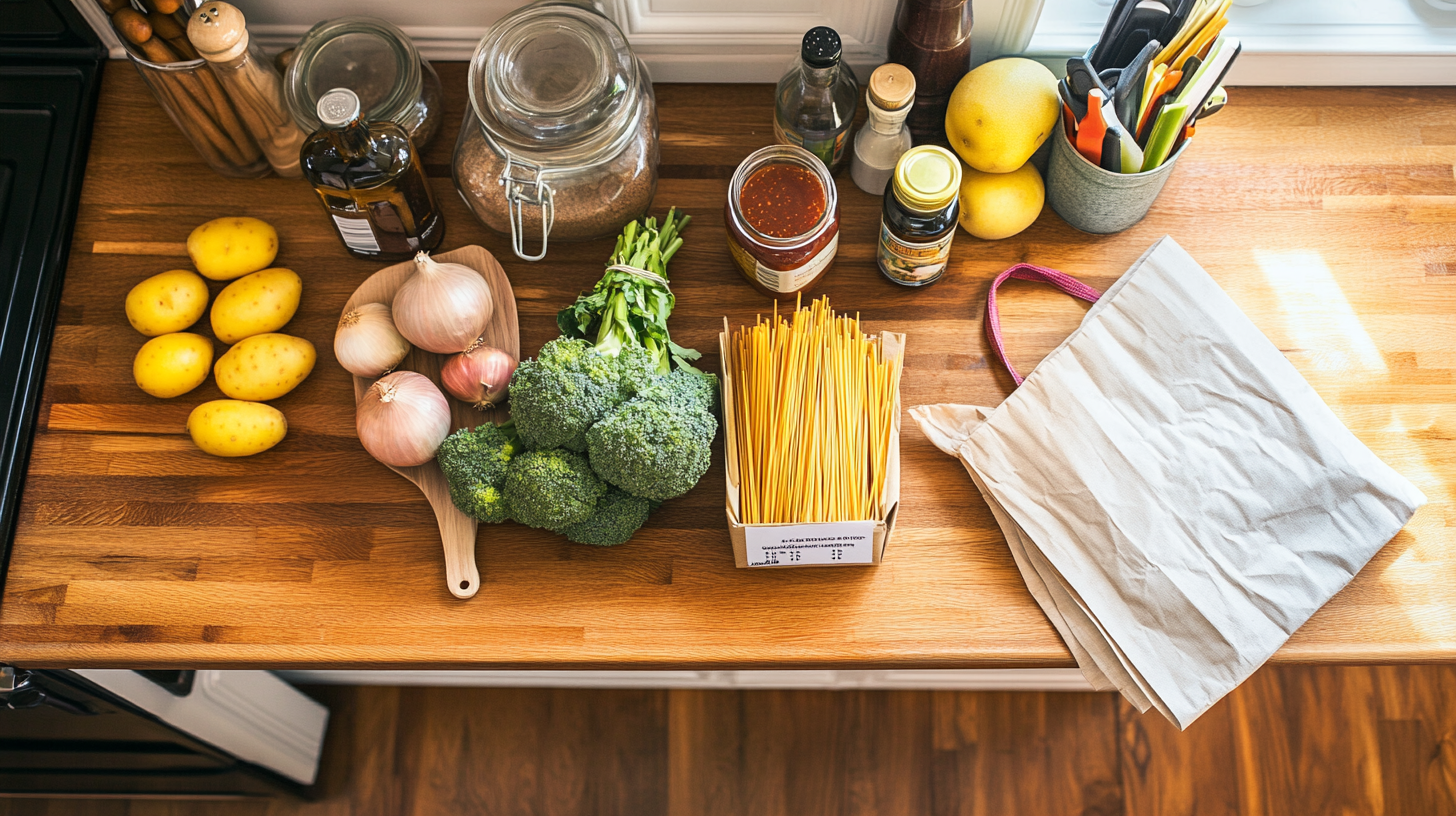
That's not a cooking problem. It's a system problem. Your brain doesn't have the bandwidth to plan, shop, and execute a meal at the same moment it's switching off from work mode. Asking it to do all three at 5pm is asking it to fail.
Why Sunday Meal Prep Doesn't Solve This (For Most Families)
Every productivity blog tells you the same thing: batch cook on Sunday, store everything in containers, problem solved. It's everywhere, and for some people, it works.
For most working parents, it doesn't. Here's why.
Sunday meal prep assumes three things that aren't true for families with young kids: that you have three uninterrupted hours on Sunday, that your kids will eat the same five things in containers all week, and that "leftovers" are still appealing on Thursday. Most weeks, at least one of these breaks down.
And when it breaks down, the whole system collapses. You spent your Sunday afternoon cooking, your kids refused the lunch on Wednesday, and by Thursday night you're back to the 5pm panic. Worse: now you also feel guilty about the wasted effort.
The bigger issue with batch cooking
Batch cooking solves the wrong problem. The problem isn't "I don't have food in the fridge on Tuesday night." The problem is "I have to decide what to do with the food in the fridge on Tuesday night."
Even if your fridge is full of pre-cooked protein and cooked grains, you still face a decision at 5pm. Which container? With what? Is anyone going to eat this? Can I make it taste like Tuesday and not like leftover Sunday?
Decision fatigue doesn't care if the food is already cooked. It cares if there's still a choice to make.
The Shift That Actually Works: Removing Decisions, Not Adding Effort
The working moms I've watched solve this problem permanently don't cook more, prep more, or organize more. They decide less. Specifically, they make their dinner decisions one time per week, in a calm moment, and they never make them again.
The difference is subtle but profound. Sunday meal prep tries to do the work in advance. A weeknight dinner system tries to do the thinking in advance. The cooking still happens on the weeknight, but the question "what's for dinner tonight" is already answered before you walk in the door.
This is how restaurants operate, by the way. No chef stands in front of a fridge at 5pm wondering what to serve. The menu was decided weeks ago. The mise en place is ready. The decisions are gone, and what's left is just execution.
What this looks like in a normal home kitchen
You sit down once on Sunday morning (or whenever your calmest weekly moment is) with a coffee and a blank piece of paper. You answer one question: what are we eating Monday through Friday this week?
You write five lines. You make one grocery list from those five lines. You shop once. Then, every weeknight, you don't think anymore. You just look at the line for that day and you cook it. If you want the exact ten-minute version of this, here's the grocery list method step by step.
The mental shift this creates is hard to describe until you've lived a week of it. At 5:30 on Tuesday, you don't open the fridge to figure out dinner. You open the fridge to start dinner. The question is already answered. Your brain stays on autopilot. Nothing is dramatic.
Want to try this for one week?
I built a free 5-day starter guide that does this for you, fully planned. Five dinners, one grocery list, the weekly rhythm explained.
Get the free guide →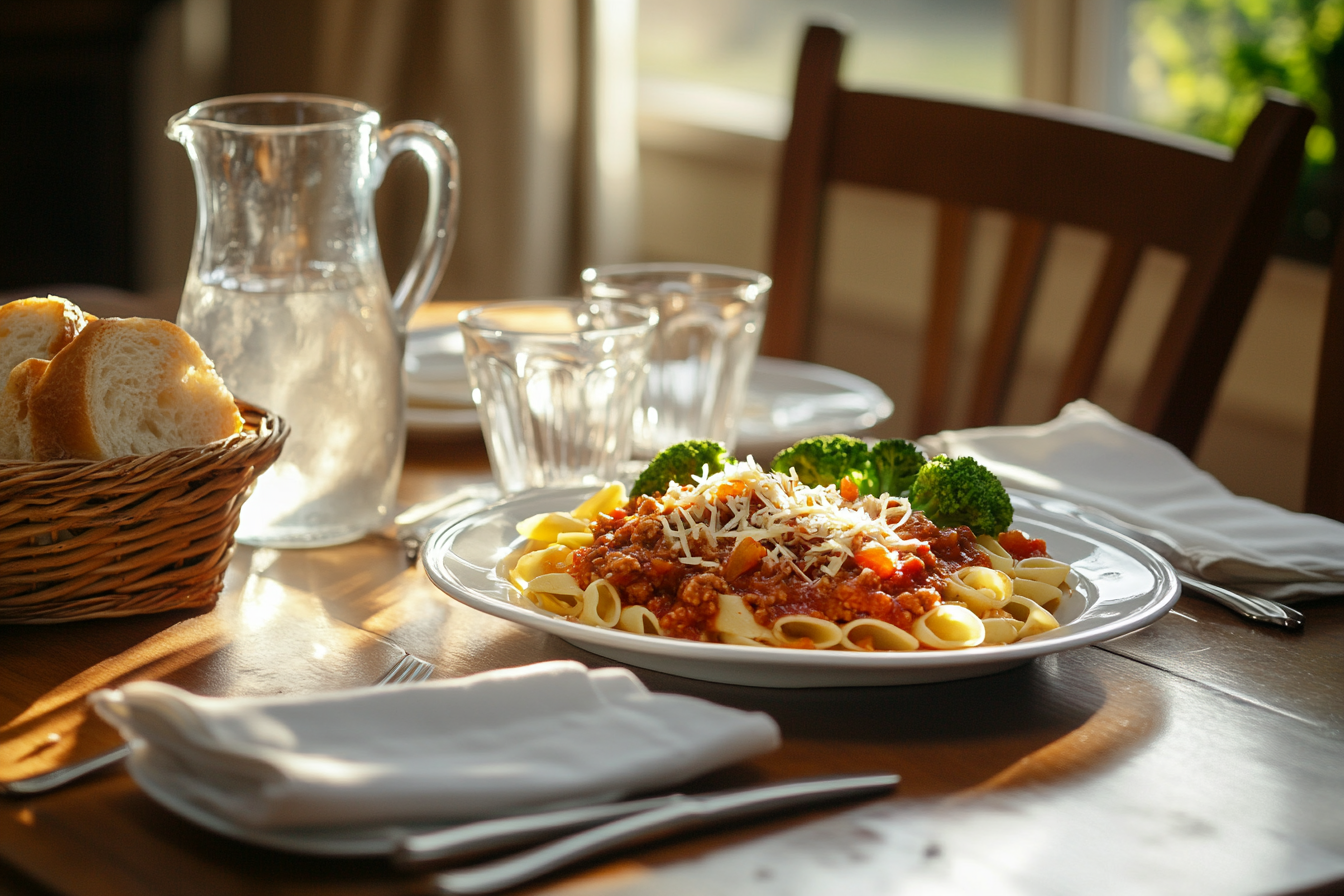
The Three Things Most Systems Get Wrong
Not all dinner planning systems are equal. Most of them fail working moms for the same reasons. Here's what to watch for.
1. They treat every night the same
Most meal plans give you five nights of equally complex recipes. Monday gets the same effort as Friday. That doesn't match how energy actually works.
By Friday, you're running on fumes. Asking yourself to execute a 45-minute recipe on Friday is asking yourself to fail. A good system gives Friday a 12-minute meal that feels like a reward, not a chore. Energy decreases through the week, and the menu should match that arc.
2. They treat every ingredient as a single use
Most recipe blogs list five completely different meals with five completely different protein purchases. So you end up with chicken thighs for Monday, ground beef for Tuesday, salmon for Thursday, and you've spent $80 at the grocery store for one week.
A real system reuses. The chicken you roast on Monday becomes shredded chicken tacos on Wednesday. Not reheated leftovers, a different meal. This isn't a money hack; it's a mental load hack. One ingredient that serves two meals removes one decision.
3. They assume you have weekend time you don't have
Any system that requires "an hour on Sunday afternoon" is asking too much of most working parents. Sundays are family time, recovery time, errand time. The system has to fit into ten minutes on a Sunday morning, or it won't survive month two.
If your meal planning takes longer than your kid's morning cartoon, you'll abandon it. The system needs to be embarrassingly fast at the planning stage so the cooking stage can be calm.
What 5pm Looks Like When the System Works
I want to describe what changes, because the difference is bigger than I expected when I built my own system.
Tuesday at 5:38 PM. You walk in the door. The kids are asking what's for dinner. You don't feel the chest-tightening you used to feel. You glance at the fridge note: Tuesday — pan-seared salmon, lemon orzo, sautéed zucchini. You already bought everything Sunday. The orzo takes 11 minutes. The salmon takes 8. The zucchini takes 4. You wash your hands and start cooking.
By 6:05, dinner is on the table. You didn't decide anything. You didn't search a recipe. You didn't make a backup plan. You just executed.
That space, the space where the deciding used to live, is what you get back. Some of my readers use it to help with homework. Some of them use it to sit on the floor and play with the kids before dinner. One of them told me she uses it to read three pages of a book while the rice cooks. That's what a system gives you. Not more recipes. More room to be a person.
Where to Start (Without Buying Anything)
If you want to test this approach this week, here's the smallest possible first step:
- This Sunday morning, with a coffee, take five minutes.
- Write down five protein-based dinners for Monday through Friday. Don't optimize. Don't research. Just write what you'd actually cook.
- From those five lines, make one grocery list.
- Shop once. Then forget about dinner planning until you cook each night.
That's it. No app, no template, no system. Just one decision made one time. See how Tuesday at 5:38 feels. If it feels different (and I think it will), you'll know the principle works for you.
From there, you can build the structure that makes it sustainable. A real system adds anti-fatigue mechanics: planned leftovers, repeating proteins across two meals, a low-effort Friday rule, a pantry that quietly does half the work. Need an easy win to start? These four plant-based dinners are the lowest-effort meals you can plan.
The complete 4-week system, ready to use
20 family dinners. 4 weekly grocery lists. The framework. The starter kit.
Get The Zero-Friction Dinner System — $29 One-time payment · Instant download · Use it foreverOne Final Thing About the 5pm Panic
If you take one thing from this, let it be this: the 5pm dinner panic is not a personal failing. It's a structural problem with no decision-making capacity left in your day. You've been trying to solve a system problem with willpower, and willpower runs out around 4pm.
The solution isn't more effort. It's fewer decisions. And the way to get fewer decisions is to make them once, in a calm moment, with a structure that respects how your week actually unfolds.
The 5pm panic is fixable. It just requires moving the thinking somewhere else.