How to Plan 5 Weeknight Dinners in 10 Minutes (The Grocery List Method)
Sunday planning shouldn't eat your evening. It does, week after week, because the method most people use is broken at the start.
Flip the order. Start with the list. Ten minutes, five dinners, done.
The Sunday Night That Eats 90 Minutes
It's Sunday, 9:00 PM. The kids are finally in bed. You sit down with a glass of water, open Pinterest "just for five minutes," and tell yourself you'll have the week's dinners planned before bed.
At 9:45, you have fourteen tabs open.
There's a sheet-pan chicken recipe that needs miso paste. A pasta you've already made twice this month. A bowl recipe that calls for two ingredients you've never bought. You've copied half a grocery list into your notes app, scratched out three items, added two more, and you're not sure anymore what's for Tuesday.
At 10:30, you close the laptop. The list has 38 items. You don't trust it. You'll redo it tomorrow.
You don't redo it tomorrow.
By Wednesday, you've already ordered pizza once.
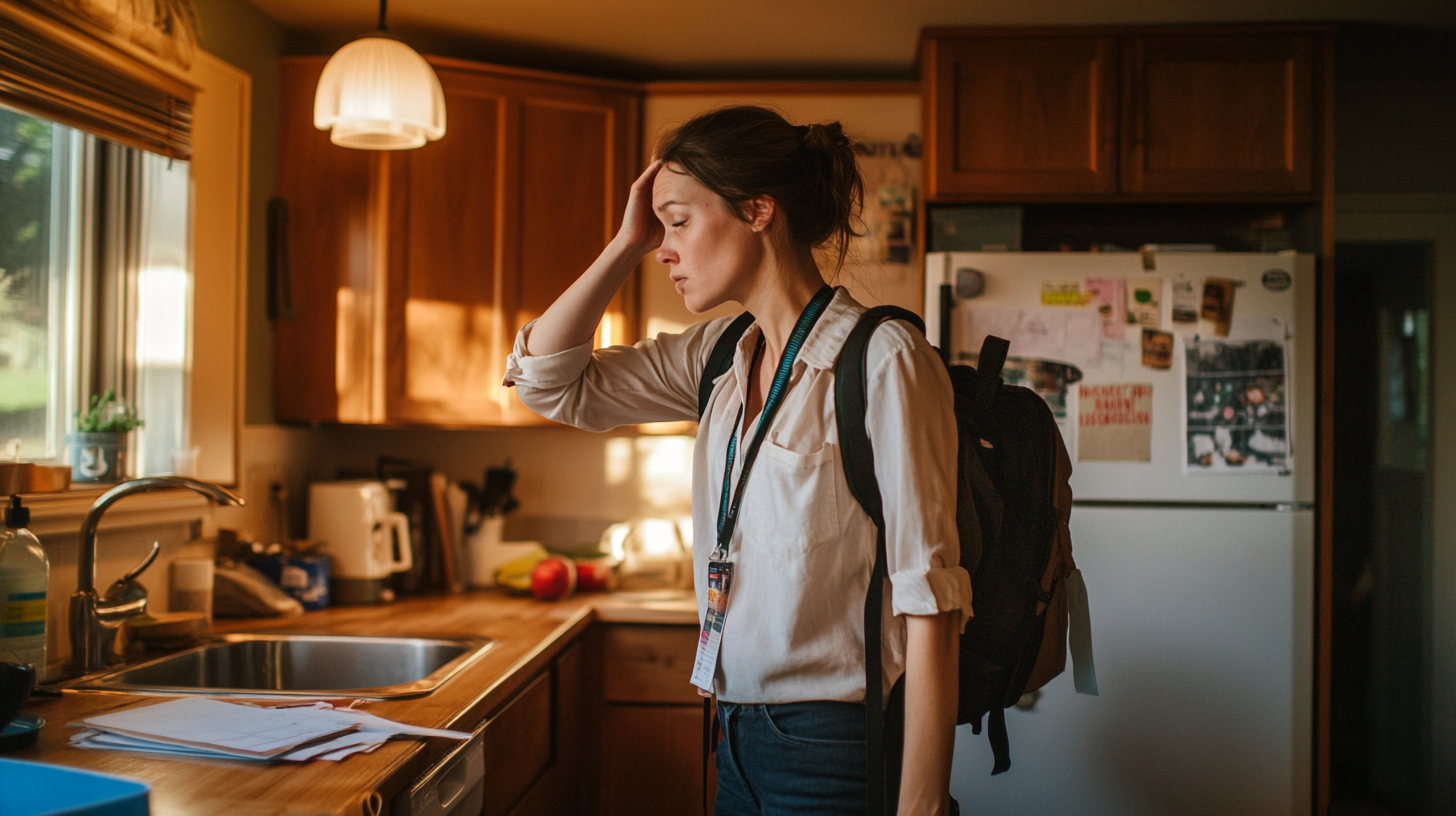
This is what most weeknight dinner planning actually looks like. Not because you lack discipline. Not because you don't know how to cook. Because the method you're using makes ninety minutes of work feel like the bare minimum.
Here's the thing nobody says out loud: planning five weeknight dinners should take ten minutes. Not because you cut corners. Because you stop doing the part that wastes the other eighty.
The part you can stop doing is reading recipes.
That's what this article is about. A different way to plan a week, one that flips the order of operations: the grocery list comes first, the recipes come after. It takes ten minutes. It produces a list of fifteen to twenty items instead of forty. And it leaves you something Sunday nights haven't seen in a while: time to do something else.
The Hidden Cost of Recipe-First Planning
Most people plan their weeknight dinners the same way. They open a recipe app or a Pinterest board, pick five recipes that sound good, and write down every ingredient each recipe needs.
This is called recipe-first planning. It feels logical. It's also what makes Sunday night take ninety minutes.
Recipe-first planning has three costs, and they compound every week.
The time cost
Every recipe you open adds four to six minutes of scrolling, reading, scanning for ingredients, copying quantities. Five recipes means thirty minutes of reading before you've written a single grocery item. You haven't planned anything yet. You've just read.
The grocery cost
A list built recipe by recipe always doubles in size. One recipe needs cilantro. Another needs parsley. A third needs basil. You buy all three. By Friday, two are wilting in the fridge. A recipe-first list lands at 35 to 40 items. A list-first list lands at 18 to 22. Same number of dinners. Half the cart.
The decision cost
This is the one nobody talks about. By the time you've finished planning, you've made fifty micro-decisions. Which recipe. Which protein. Which side. Which substitute when the recipe calls for something you don't have. By Tuesday at 6:45 PM, your decision-making is already exhausted, and dinner is still ahead of you.
Recipe-first planning treats every dinner as a fresh problem to solve. It's why it never gets faster, no matter how many weeks you've been doing it.
The fix isn't more recipes. It isn't a better app. It's a different starting point.
Start With the List, Not the Recipes
What changes everything is simple. You stop starting with recipes. You start with a list.
Not a list copied from recipes. A list you build first, on its own, with no recipes open. A list that decides what your week looks like, before any specific dish is named.
The principle is straightforward. You're going to fill four categories of need. Each category has a target number. When the categories are full, the list is done. The recipes come after, built around what's on the list, not the other way around.
A week of dinners doesn't need 40 ingredients. It needs four proteins, a handful of fresh produce, a few add-ons, and a couple of pantry safety nets. That's it. Fifteen to twenty items, total. One trip. One list.
The shift sounds small. It changes everything because it removes the part of planning that consumes the most time and energy: matching ingredients to recipes one by one. Instead, you commit to a grocery list, and the recipes assemble themselves around what you bought.
This is how restaurant kitchens work. A chef doesn't write a menu first and then go shopping. The market comes first. The menu adapts. The constraint is the source of the speed.
Your kitchen can work the same way.
The 4 Categories That Cover a Whole Week
Here are the four categories. Each one has a target. Hit the target, move on.
Proteins · 4 items for 5 meals
Pick four proteins. One of them should be larger than the others, big enough to cook on Monday and have leftovers for a second meal later in the week. The other three are for single-meal use.
At least one should be a plant protein. Canned chickpeas, canned black beans, or a block of firm tofu. Plant proteins are cheaper, store longer, and require zero temperature anxiety. There's no risk of undercooking a can of beans. They're the lowest-friction meal you can plan, and if you want four that kids actually eat, start here.
Aim for at least one fish on the list. Salmon, cod, or shrimp. Fish defrosts fast and cooks faster.
Four proteins. Five dinners. One protein does double duty.
Fresh produce · 6 to 8 items
This is where most people overshoot. You don't need every vegetable in the store. You need six to eight, chosen so they show up in multiple dinners. Sweet potatoes work in three different meals. Bell peppers work in four. A bag of spinach works in five.
Pick produce that's flexible. Roastable, sautéable, edible raw. Avoid the trap of buying a single fancy ingredient for one specific recipe. If it only fits one dinner, it shouldn't be on the list.
Dairy and fresh add-ons · 2 to 4 items
Eggs, shredded cheese, a piece of feta, a lemon. Small quantities, high impact. These are the items that turn an ordinary dinner into something worth eating.
The rule here: buy what carries flavor or texture. Skip what's only there for show.
Canned and frozen · 2 to 4 items
This is your safety net. A can of chickpeas. A bag of frozen peas. A can of crushed tomatoes. Edamame in the freezer.
These items are what make Friday possible in twelve minutes. They sit in your pantry without going bad. They turn a half-empty fridge into a complete dinner. Every week should have two or three on the list.
Four categories. Sixteen to twenty-two items. Five dinners.
The list takes ten minutes because there's no recipe to read. You're not deciding what to cook yet. You're deciding what to buy. The cooking decisions happen later, with the bag in front of you.
One Real Example, Start to Finish (10 Minutes on the Clock)
Here's what it looks like in practice. A real week, planned start to finish. I'm timing myself.
I pick four. Chicken thighs (the big one, for Monday and a second meal). Salmon fillets. Ground beef. Canned chickpeas.
That's the protein column. Done.
Sweet potatoes. Broccoli. Bell peppers. Cherry tomatoes. Baby spinach. One lemon. Garlic. Scallions.
Eight items. Each one shows up in at least two of the five dinners.
A dozen eggs. Shredded cheese. A small block of feta.
Three items. Eggs cover breakfast too, so they always earn their place.
Canned black beans. Frozen peas.
Two safety nets. The black beans will probably go into Wednesday's reinvention. The peas are insurance for Friday.
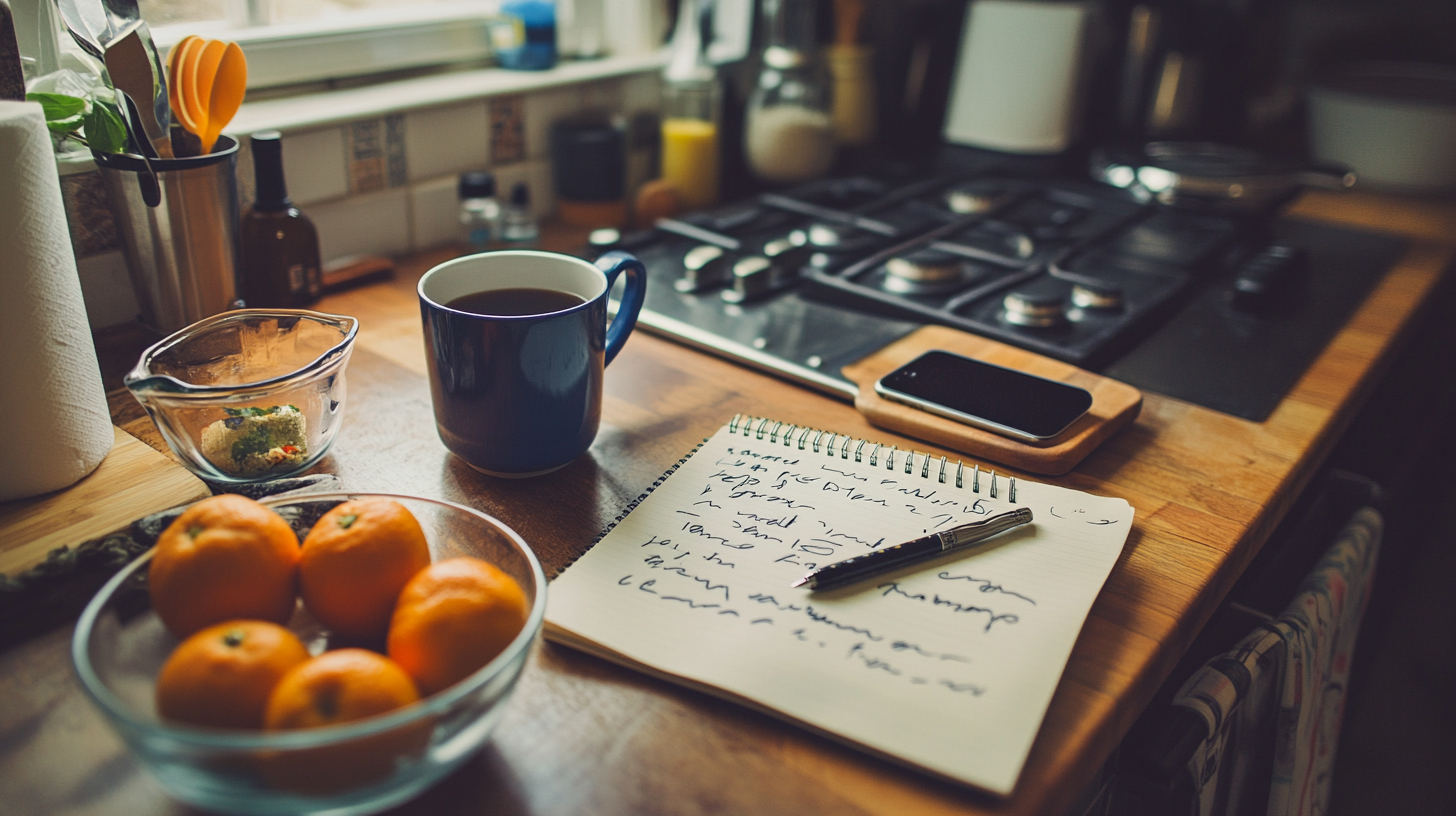
Now I open my notebook and write five lines.
- Monday: chicken thighs in the oven with sweet potatoes and broccoli. I cook eight thighs, not five. The extra goes in a container.
- Tuesday: salmon pan-seared, with spinach and lemon on the side.
- Wednesday: shredded chicken from Monday, mixed with black beans and cheese, rolled into tortillas. The tortillas live in my freezer, so they're not on this week's list.
- Thursday: chickpea bowl. Roast the chickpeas with paprika. Bell peppers, feta, frozen peas, scallions on top. Some kind of grain underneath, rice or couscous, both already in my pantry.
- Friday: ground beef quickly browned with cherry tomatoes, eggs scrambled in at the end, served on toast. Twelve minutes.
Fourteen items to buy. Four proteins doing the work of five dinners. One fish. One plant-based meal. Monday handles Wednesday. Friday is twelve minutes.
I close the notebook. The plan is done. I haven't read a single recipe.
This is what ten-minute planning actually looks like. It works because the constraint is the list, not the inspiration. Fourteen items in your cart is enough for five dinners. It's enough because you built the list to make sure of it.
Want to see this method applied to a real week?
The free 5-Dinner Starter Week shows you five complete weeknight dinners with the exact grocery list, built the same way: list first, recipes second.
Get the free guide →What This Method Doesn't Solve (Yet)
The method above works. You can use it this Sunday and have a real week of dinners by Tuesday. That's the point of writing it down.
But there's a difference between planning one week and running a system that works every week. The grocery list method is the first piece. It isn't the whole thing.
Here's what one method alone doesn't cover.
Rotation across multiple weeks
This week's plan works. Next week's plan will work too, if you remember not to put chicken on Monday four weeks in a row. The list method doesn't manage rotation on its own. Without a framework, you'll either repeat yourself or scramble for variety. Both are tiring.
The Monday-to-Wednesday cooking method
I mentioned it in the example: Monday's chicken handles Wednesday. That's a specific technique. There's a way to cook Monday so Wednesday's reinvention isn't reheating. The list method gets you to the surplus. It doesn't teach you what to do with it.
The recipes themselves
A plan is not a meal. You still need to know how to turn chicken thighs and sweet potatoes into a Monday dinner that your family will eat. The list method names the dinner. It doesn't cook it.
The pantry that makes the list shorter
My list above was fourteen items because rice, couscous, soy sauce, olive oil, honey, vinegar, salt, pepper, paprika, and garlic are already in my kitchen. Without that pantry, the same week would have been twenty-four items, and the planning would have taken twice as long. The list gets shorter when the pantry gets right. That's its own framework.
The ten-minute list is the entry point. The system is what makes it sustainable beyond week one.

The full system that makes the 10-minute list possible every week
20 family dinners across 4 weeks. The pantry that cuts your weekly list by 30%. The Monday-to-Wednesday cooking method that gives you back two evenings. And the Build Your Own Week guide that walks you off the recipes by week five.
Get The Zero-Friction Dinner System — $29 One-time payment · Instant download · Use it foreverOne Last Thing About Sunday Nights
The reason this method works isn't because it's clever. It's because it stops treating five dinners as five separate problems. One list. One constraint. Five meals that fit inside it.
If you try it this Sunday, take a moment around 9:15 PM. The list is on your counter. You're not scrolling. You're not opening tabs. You're not arguing with yourself about miso paste. You've decided what to buy, and the recipes will follow when the bag is on the counter Monday evening.
Notice what's not happening: the Pinterest spiral, the second-guessing, the 38-item draft you'll abandon by morning. Notice the quiet.
That's what ten-minute planning feels like. One Sunday at a time, until the week becomes a rhythm instead of a recurring crisis.